
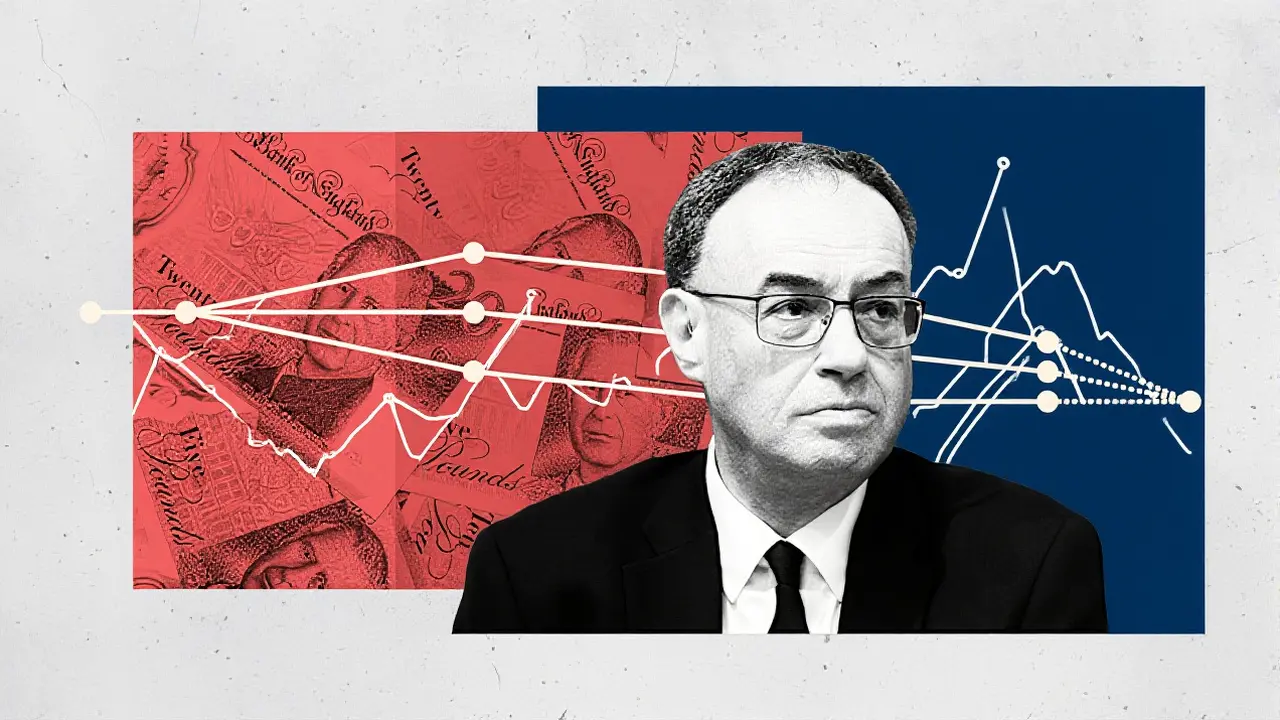
The Bank of England decided to keep its base interest rate at 3.75% on 19 March 2026, as a deepening conflict in the Middle East threatens to send energy bills skyrocketing once again. The decision, reached by a unanimous 9-0 vote, marks a cautious pause for policymakers who are staring down a stubborn inflation rate of 3%, well above their official 2% target. It's a high-stakes waiting game: the central bank wants to support growth, but it can't ignore the volatile oil and gas markets that could trigger a fresh cost-of-living spike for millions of households.
Here's the thing: this isn't just a routine hold. After a series of six rate cuts since August 2024, the mood in Threadneedle Street has shifted from relief to vigilance. The Monetary Policy Committee (MPC) spent three days—from 16 to 18 March—wrestling with data that shows a fragile recovery being threatened by external shocks. Turns out, the geopolitical instability in the Middle East is no longer just a distant concern; it's actively disrupting the transportation and supply of energy, which means fuel and utility costs are likely to climb.
Energy Crisis and the Inflation Tug-of-War
The twist is that while the UK has seen some progress in bringing prices down, the current war is creating a "supply-side shock." When energy prices rise, it doesn't just hit the pump; it bleeds into everything from the cost of baking bread to the price of shipping electronics. The MPC noted in its official statement that these disruptions will push inflation higher than previously expected, at least in the short term. Oddly enough, the longer the conflict drags on, the more permanent these price hikes could become.
To keep things in perspective, the gap between the current 3% inflation and the 2% target might seem small, but in the world of central banking, that 1% difference is a canyon. It's the difference between a stable economy and one where purchasing power is slowly eroding. The Bank is now stuck in a difficult position: cutting rates too early could fuel inflation, but keeping them too high for too long could stifle a struggling economy.
- Current Bank Rate: 3.75% (Unchanged)
- MPC Vote: 9-0 (Unanimous)
- Current Inflation: 3.0% (Target: 2.0%)
- Previous Trend: 6 rate cuts since August 2024
- Next Decision Date: 30 April 2026
The Mechanics of Monetary Control
For those who aren't deep into the weeds of finance, the Bank Rate is essentially the "price of money." It's the rate the central bank charges commercial lenders. When this rate stays steady, it provides a predictable baseline for mortgages and business loans. However, the MPC has other tools in its kit. They're currently balancing Quantitative Easing (QE)—injecting money into the economy—with Quantitative Tightening (QT), which is basically the process of pulling that money back to cool things down.
These levers influence liquidity across the entire United Kingdom. When the Bank holds rates, it's a signal to the markets that they are playing it safe. Financial traders, who treat MPC dates like major sporting events, were watching closely at 12:00 noon on 19 March to see if there were any hints of a surprise hike. The result was a steady hand, but the underlying anxiety about global energy supplies remains.
What This Means for Homeowners and Businesses
But wait, does this actually matter to the average person? Absolutely. A hold at 3.75% means that for now, there won't be an immediate jump in variable-rate mortgages. But that's the good news. The bad news is the "energy tax" coming from the Middle East. If fuel prices rise, businesses will likely pass those costs on to consumers. We're looking at a scenario where your mortgage payment stays the same, but your heating bill and grocery list get more expensive.
Industry experts suggest that the Bank is essentially "monitoring the storm." By not cutting rates further, they are keeping a bit of powder dry. If inflation spikes to 4% or 5% due to oil shocks, they might even have to consider raising rates again—a move that would be a nightmare for anyone with a floating-rate loan.

The Road Ahead: Key Dates to Watch
The MPC doesn't just guess; they follow a rigid calendar. Each meeting lasts three days, culminating in a vote on the final day. Looking forward, the next critical date is the April MPC Announcement London , scheduled for 30 April 2026. Between now and then, the Bank will be obsessing over energy data and geopolitical developments.
The full 2026 schedule is already set, with major reports and decisions coming on 18 June, 30 July, 17 September, 5 November, and 17 December. Each of these dates will be a pulse-check on whether the UK can navigate this energy crisis without falling back into a deep inflation trap.
Frequently Asked Questions
Why didn't the Bank of England cut rates further?
The Committee is concerned that the war in the Middle East is driving up energy prices. Because inflation is currently at 3%—which is higher than the 2% target—cutting rates now could potentially accelerate price increases, making the inflation problem worse while energy costs are volatile.
How does the Middle East conflict specifically affect UK inflation?
Conflict in energy-rich regions disrupts the transportation and supply of oil and gas. This leads to higher wholesale energy prices, which then trickle down to consumers through more expensive home heating, electricity bills, and higher transport costs for goods, pushing overall inflation upward.
What is the difference between Quantitative Easing and Tightening?
Quantitative Easing (QE) is when the Bank creates new money to buy government bonds, pumping liquidity into the economy to encourage spending. Quantitative Tightening (QT) is the opposite; the Bank reduces its bond holdings to remove money from the system, which helps cool down an overheating economy and fight inflation.
When is the next interest rate decision?
The next Bank Rate decision is scheduled for Thursday, 30 April 2026. This follows a three-day MPC meeting that concludes on 28 April, with the final decision announced at 12:00 noon UK time on the 30th.

Gary Clement
April 24, 2026 AT 17:40the lag between base rate changes and actual mortgage pricing is always the real killer here since banks usually bake in their own margins before passing on the cuts
Antony Bachtiar
April 25, 2026 AT 19:32absolute joke that they call this a cautious pause lol its basicly just them admitting they have no idea how to handle a supply shock without wrecking the average workers wallet. why do we even pretend these 9-0 votes mean anything when the outcome is always the same mess
Shelley Brinkley
April 26, 2026 AT 15:23imagine thinking a 1% gap is a canyon lol its just a rounding error in their favor while we pay more for bread
Aaron X
April 27, 2026 AT 12:52The systemic dichotomy here is the tension between monetary aggregates and the exogenous volatility of the energy sector. We are observing a classic stagflationary pressure where the central bank's heuristic for inflation targeting becomes decoupled from the actual socioeconomic utility of the citizenry. The utilization of Quantitative Tightening in this specific conjuncture represents a precarious attempt to maintain currency equilibrium while the underlying fundamental drivers are dictated by geopolitical kinetic actions rather than domestic fiscal policy. It is an asymptotic struggle against a variable they cannot control with a lever designed for a different era of liquidity management. Essentially, they are treating a hemorrhage with a bandage applied to the wrist.
Josh Raine
April 28, 2026 AT 00:08Exactly what I was thinking! 🙄 It is absolutely infuriating that these ivory tower elites just sit there and "monitor the storm" while actual people are choosing between heating and eating. Why is the burden of stabilization always placed on the shoulders of the poor while the banks keep their margins fat? It is a systemic failure of the highest order and anyone pretending this is a "balanced" approach is just lying to themselves or the public! 😡
Mel Alm
April 29, 2026 AT 17:01just hope the gas prices dont go too crazy this winter its already gettin hard to keep up with the bills
Dianna Knight
April 30, 2026 AT 21:35It really feels like we are in a period of extreme macroeconomic volatility ✨. The way these supply-side shocks permeate through the value chain is just heartbreaking for small businesses trying to maintain their margins without alienating their customer base. We should all try to be supportive of our local vendors right now since they are absorbing so much of this pressure before they're forced to hike prices! 🤗
Kartik Shetty
May 1, 2026 AT 01:52the simplistic narrative that rates alone control inflation is quaint at best one must understand that the sterling's valuation relative to the dollar is the actual pivot point here though few in the west seem to grasp the nuance of currency arbitrage in a crisis
nikolai kingsley
May 2, 2026 AT 18:01honestly the gov should just seize the energy companys profits to pay for the bills stop lets them rob us blind while the bank plays games with 3.75% its a moral disgrace to the working class
Beth Elwood
May 4, 2026 AT 12:16If anyone is worried about their variable rate, now is the time to look into fixing your term if you can still get a decent deal 🏠📉. The risk of a hike if inflation hits 4% is very real and it could catch a lot of people off guard 🚩
Mason Interactive
May 6, 2026 AT 01:51It's wild how different the vibe is over here compared to the UK. We've got our own issues but the way the BoE handles things always seems so rigid compared to the Fed's movements lately
Alex Green international
May 8, 2026 AT 00:42It is quite understandable that the committee feels a sense of trepidation regarding the current global climate. One must remain patient and hopeful that the diplomatic efforts in the Middle East yield results soon to ease the pressure on the markets
Angie Khupe
May 8, 2026 AT 09:20I just hope everyone can find a way to get through this without too much stress 😊 lets try to keep things positive and help each other out!
Anu Taneja
May 10, 2026 AT 07:28Stability is the only goal right now