
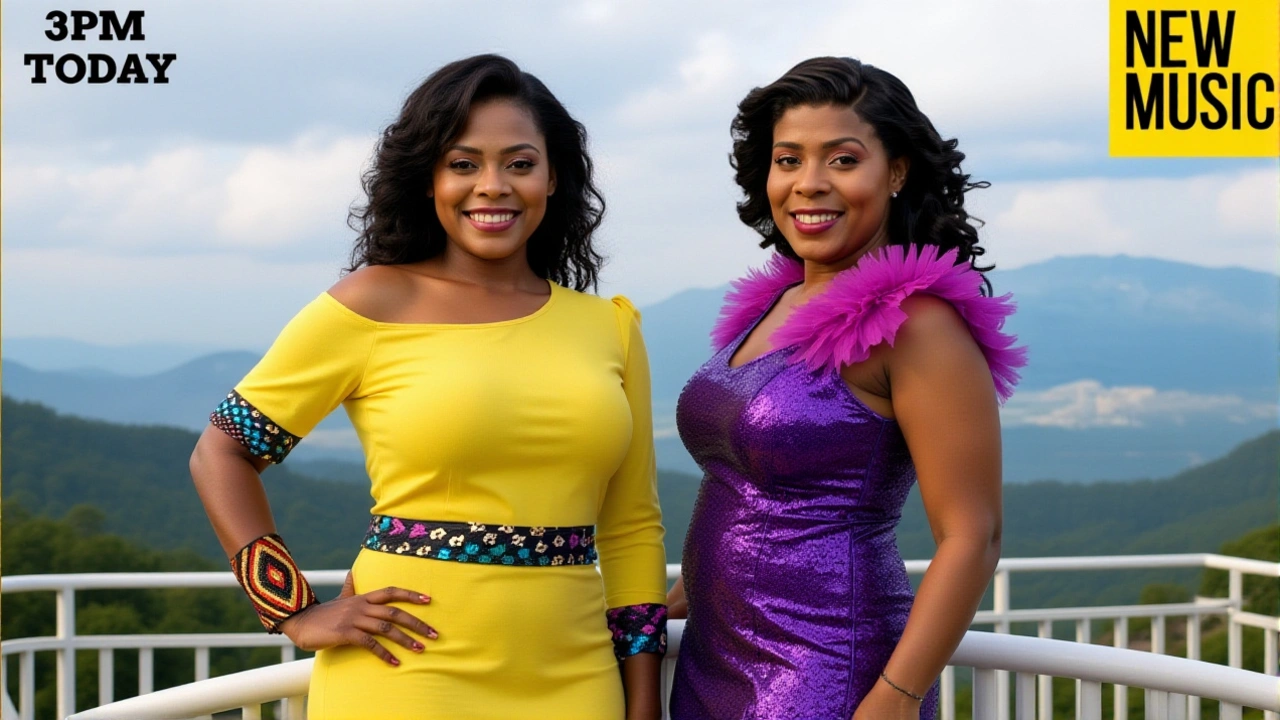
When Betty Bayo and Rose Muhando dropped their new Swahili duet, Unamuwinda Nani, they didn’t just release a song—they ignited a cultural moment. The official music video, uploaded to YouTube under the title BETTY BAYO *ROSE MUHANDO UNAMUWINDA NANI (Official music video), isn’t just another visual release. It comes with a direct, actionable nudge: SMS SKIZA to *811*416# to set the track as your ringback tone. That’s not marketing fluff—it’s a strategic push into the mobile-first music economy of East Africa, where ringback tones still move units faster than streams.
From Dance Challenge to Mainstream Hit
The song didn’t appear out of nowhere. Four years earlier, in roughly November 2021, YouTube creator Dada Sarah uploaded a dance challenge video titled Unamuwinda Nani challenge Betty bayo x Rose Muhando. At the time of this report, that video had exactly 10,000 views and 371 shares. Not massive by global standards, but in the regional context, it was a quiet spark. Dada Sarah’s channel, with precisely 151,000 subscribers, had already built a loyal following for East African dance trends. That video, now a historical footnote, became the foundation for the official release’s momentum.The timing couldn’t be better. With Unamuwinda Nani now officially out, the challenge is being revived—not just by fans, but by influencers and radio DJs across Tanzania and Kenya. The lyrics, entirely in Swahili, tap into a deep well of cultural pride. Phrases like "Unamuwinda nani?"—"Who will you defeat?"—are catchy, rhythmic, and ripe for call-and-response in clubs, weddings, and even schoolyards.
Multi-Platform Strategy: Shazam, YouTube, and Skiza
This isn’t a one-platform play. The song is fully integrated across three key systems. First, Shazam lists the track under the exact title Unamuwinda Nani (feat. Rose Muhando) - Betty Bayo, linking directly to concert info and ticket sales. No dates are public yet, but the inclusion signals that live performances are coming—likely in Dar es Salaam, Nairobi, or Mombasa.Second, YouTube hosts three distinct versions: the official video, a lyric video titled Rose Mhando ft Betty Bayo - UNAMUWINDA NANI (new song-lyrics), and the original challenge clip. The lyric video, despite its inconsistent spelling of "Mhando" (a known variation), is gaining traction for its animated visuals and clean presentation. The production quality suggests professional backing, likely from a local label or independent studio with regional reach.
Third, the Skiza ringback tone promotion ties directly to Safaricom’s mobile platform. The SMS code *811*416# is a direct gateway to revenue—each activation generates a micro-payment shared between the artist, distributor, and telecom provider. In markets where data is expensive but SMS is cheap, this model still works. It’s old-school, but it’s effective.
Why This Matters Beyond the Charts
Most African music releases rely on viral TikTok trends or radio play. But here, we’re seeing a hybrid model: a dance challenge from a mid-tier YouTuber, a telecom-integrated monetization layer, and a polished official release—all working in sync. It’s a blueprint for how independent East African artists can bypass traditional Western-dominated streaming gatekeepers.The fact that the song is performed entirely in Swahili, with no English translations pushed in marketing, speaks volumes. It’s not trying to go global. It’s doubling down on its home audience. And that’s smart. In Tanzania and Kenya, Swahili-language content commands higher engagement than English alternatives. Local identity isn’t a limitation—it’s the selling point.
There’s no word yet on record labels, producers, or songwriting credits. No interviews with the artists. No financial figures. But you don’t need those to see the impact. The numbers are in the views, the shares, the SMS codes being typed into phones across the region.
What’s Next?
Expect tour announcements soon. Shazam already has Betty Bayo’s profile set up for ticket sales. The real question isn’t if she’ll tour, but where and when. Will it be a single-city showcase in Dar? A multi-country tour hitting Arusha, Kampala, and Mombasa? The dance challenge’s revival could turn into a live event series, with fans recreating the moves on stage.And what about Rose Muhando? Her 2021 hit Wanyamazishe is still trending on YouTube. With this collaboration, she’s cementing herself as a consistent force in Swahili pop. If the pattern holds, she’ll be the next East African artist to cross over into mainstream Afrobeats playlists—without ever leaving her linguistic roots.
Frequently Asked Questions
How does the Skiza ringback tone promotion work for fans in Kenya and Tanzania?
Fans in Kenya and Tanzania can activate Unamuwinda Nani as their ringback tone by sending an SMS with the word "SKIZA" to *811*416#. This charges a small fee—typically 10-20 Kenyan shillings or Tanzanian shillings—shared between Safaricom, the artist, and the distributor. The service works on both prepaid and postpaid lines, making it accessible to millions who can’t afford data-heavy streaming.
Why are there different spellings for Rose Muhando’s name across platforms?
The variation between "Muhando" and "Mhando" appears to be a mix of typographical errors and inconsistent metadata entry. Official sources, including the YouTube music video and Shazam, use "Muhando." The misspelling in the lyric video’s title doesn’t affect searchability because the song’s title and hashtags (#Rosemuhando) anchor the correct spelling. This is common in regional music markets where digital tagging isn’t always standardized.
Is the dance challenge still active, and how can people join?
Yes, the challenge is resurging as the official video gains traction. Fans are posting videos dancing to the beat, often wearing bright African prints and using the hashtag #UnamuwindaNaniChallenge. The original video by Dada Sarah remains a reference point. No formal rules exist—participants just mimic the signature hip-sway and hand motion from the 0:45 mark. It’s spontaneous, organic, and spreading faster than any branded campaign could.
What does this mean for independent African artists trying to break through?
This release proves you don’t need a global label or English lyrics to succeed. By leveraging local platforms—SMS-based services, YouTube, and grassroots dance challenges—artists can build loyal followings without relying on Western algorithms. The combination of cultural authenticity, mobile monetization, and community-driven virality is a powerful new formula for African music’s next wave.
Are there any confirmed tour dates for Betty Bayo?
No official dates, venues, or ticket prices have been released yet. However, Shazam’s integration with ticketing systems strongly suggests live performances are in planning. Given the song’s regional popularity, expect announcements in the next 30–60 days, likely focused on major Swahili-speaking cities like Dar es Salaam, Nairobi, and Arusha.
Why hasn’t the song been released on Spotify or Apple Music?
It likely will be—eventually. But for now, the focus is on markets where mobile data access is limited but SMS penetration is near-universal. Ringback tones and YouTube are more reliable revenue streams in Tanzania and Kenya than streaming royalties, which often pay fractions of a cent per play. The artists are prioritizing immediate, tangible income over global reach.

Ronda Onstad
November 12, 2025 AT 01:43Honestly, this is one of those rare moments where culture and tech actually align in a way that feels organic. I live in the US, but I’ve been following Swahili music for years-there’s something so raw and alive about how these artists build momentum without needing to cater to Western algorithms. The SMS ringback tone thing? Genius. It’s not just monetization-it’s participation. People aren’t just listening, they’re *owning* the song by making it part of their daily communication. That’s deeper than any playlist ever could be.
And the fact that they didn’t translate a single lyric? That’s power. Not every hit needs to be digestible for global audiences. Sometimes, the most authentic art is the kind that refuses to explain itself to outsiders. This isn’t trying to be Afrobeats 2.0-it’s just Swahili pop, doing its thing, loud and proud.
I’ve seen so many African artists get pressured to ‘cross over’ by adding English hooks or simplifying their sound. But here? No compromises. Just rhythm, pride, and a damn good dance move at 0:45. That’s the kind of success that lasts.
Also, props to Dada Sarah. That 10K-view video was the quiet spark. Sometimes the real influencers aren’t the ones with millions of followers-they’re the ones who just post what they love and hope someone else feels it too. That’s how movements start.
And Rose Muhando? She’s been quietly building a legacy since ‘Wanyamazishe.’ This isn’t a comeback-it’s a coronation.
Can’t wait to see if this turns into a live tour. Imagine a stadium in Dar, thousands of people screaming ‘Unamuwinda nani?’ in unison. That’s not music. That’s collective catharsis.
Steven Rodriguez
November 13, 2025 AT 14:40Let’s be real-this isn’t innovation, it’s nostalgia dressed up as disruption. Ringback tones? In 2025? That’s like selling fax machines as ‘revolutionary business tools.’ The whole thing reeks of desperation masquerading as cultural strategy. You don’t build a music empire on SMS codes-you build it on global reach, on streaming dominance, on Spotify placements. This is what happens when you’re too scared to compete on the world stage.
And don’t get me started on the ‘no English’ thing. That’s not confidence-that’s isolation. You think you’re preserving culture? You’re just cutting yourself off from revenue streams that could lift these artists into the stratosphere. The West doesn’t need to ‘understand’ Swahili to appreciate rhythm. Look at Burna Boy-he sings in Yoruba and still owns global charts. Why? Because he didn’t hide behind his language-he made it irresistible to everyone.
This isn’t a blueprint. It’s a fallback plan for artists who couldn’t crack the international game. Sad.
Zara Lawrence
November 15, 2025 AT 13:40Forgive me for being skeptical-but is it just me, or does this entire campaign feel orchestrated by a telecom conglomerate with hidden agendas? Safaricom has a history of leveraging cultural trends to lock in customer loyalty. This ‘ringback tone’ push? It’s not about the music-it’s about data capture, usage tracking, and creating dependency on their platform. And the fact that no record label is named? Suspicious. Where are the publishing rights? Who owns the master? Who benefits from the 10–20 shilling fee? Not the artists, probably.
And the ‘dance challenge’ revival? It’s being pushed by influencers who are likely paid by the same telecom partner. The hashtag #UnamuwindaNaniChallenge? Too clean. Too synchronized. Real organic trends don’t look this polished.
I’ve seen this before. In 2018, a viral Nigerian dance was tied to a mobile top-up campaign. Within months, the original creators were erased from the narrative. Who’s protecting these artists? Or are they just convenient vessels for corporate monetization?
Also, why is the lyric video misspelling ‘Muhando’ as ‘Mhando’? Is this a deliberate obfuscation tactic? To muddy attribution? I’m not paranoid-I’m informed.
Ashley Hasselman
November 15, 2025 AT 15:04So let me get this straight-artists are making bank off SMS codes because people can’t afford Spotify? Cute. Meanwhile, in the real world, people are paying $10/month for unlimited music. This isn’t ‘smart monetization,’ it’s a cry for help. And the fact that they’re not even on Apple Music? Pathetic. This isn’t a movement-it’s a last-ditch effort to stay relevant in a market that’s about to leave them behind.
Also, ‘Unamuwinda Nani’? Sounds like a bad translation of ‘Who Are You?’ from Google Translate. I’m not even sure it’s grammatically correct. Who’s writing these lyrics? A high school Swahili student?
Kelly Ellzey
November 16, 2025 AT 08:00Okay, I just need to say this: this is beautiful. 🌍❤️
People are so quick to say ‘if it’s not on Spotify, it’s not real,’ but that’s the whole problem with how we think about music now. It’s not about platforms-it’s about people. This song is alive because it’s in people’s phones, because they’re dancing to it in kitchens, because they’re texting ‘SKIZA’ to their friends like it’s a secret handshake. That’s magic.
And the fact that it’s all in Swahili? That’s not a barrier-it’s a gift. It’s saying, ‘this is for us, and if you want in, you learn.’ No apologies. No translations. No watering down. That’s radical. And I love it.
Also, shoutout to Dada Sarah-151k subs and a video that started this whole thing? That’s the real hero. No label. No PR team. Just someone who loved the beat and hit ‘upload.’
And Rose? She’s been killing it for years. This isn’t a ‘collab’-it’s a celebration of her legacy. Betty Bayo? She’s got that voice that feels like home. I don’t know Swahili, but I feel every word.
Please, someone make this a live tour. I’ll fly to Dar if I have to. Let’s turn this into something bigger than a song-let’s make it a moment.
And hey-if you’re reading this and you’ve ever felt like your culture doesn’t ‘count’ in the global music scene? This is your sign. It counts. It always has.
maggie barnes
November 17, 2025 AT 16:28OMG this is so cringe. Why is everyone acting like this is some revolutionary moment? Ringback tones? In 2025? Who even uses those anymore? I bet the ‘10,000 views’ on the dance video was bought. And ‘Mhando’ instead of ‘Muhando’? LOL. Someone didn’t proofread. And don’t even get me started on the ‘no English’ thing-this isn’t cultural pride, it’s self-sabotage. No wonder they’re stuck in a 2010s tech loop. If you want to be heard globally, you speak the language of the market. English. Not ‘Swahili-only’ nonsense. This isn’t art-it’s a relic. 🤡
Lewis Hardy
November 19, 2025 AT 03:45I’ve been listening to this track on loop since it dropped. I don’t speak Swahili, but I don’t need to. The rhythm, the call-and-response in the chorus, the way the beat just… clicks-it’s hypnotic. I’ve watched the dance challenge videos on TikTok and YouTube. People from Nairobi to Kampala to Mombasa are doing it. No one’s forcing them. They just… do it. That’s the real power here.
And the SMS thing? Yeah, it’s old-school, but it’s brilliant because it’s accessible. My cousin in Arusha doesn’t have data for Spotify, but she has a basic phone. She can send ‘SKIZA’ and hear the song every time someone calls her. That’s not a workaround-that’s a win.
Also, I’ve been digging into Rose Muhando’s older stuff. ‘Wanyamazishe’ is still bumping in her local market. This isn’t a fluke. She’s built something real. Betty Bayo? Same energy. They’re not chasing trends-they’re setting them.
I don’t know if this will go global, but honestly? I don’t care. It’s already global in the way that matters: it’s moving people. And that’s more than most songs ever do.
Prakash.s Peter
November 19, 2025 AT 05:08Let us be unequivocally clear: this is not a paradigm shift. It is a regressive artifact of infrastructural limitation masquerading as cultural innovation. The use of SMS-based ringback tones as a primary monetization vector is symptomatic of a market that has failed to modernize its digital infrastructure. In contrast, Nigeria’s Afrobeats scene leverages YouTube, Spotify, and Apple Music with precision, while simultaneously cultivating global brand partnerships. This model is not ‘smart’-it is a capitulation.
Furthermore, the linguistic insularity is not ‘authentic’-it is exclusionary. Art that refuses to transcend linguistic boundaries is art that refuses to evolve. The misspelling of ‘Mhando’ in metadata is not an oversight-it is evidence of systemic negligence in digital curation.
And yet, the fact that this is being hailed as ‘groundbreaking’ reveals a profound deficit in global music discourse. We are celebrating the minimum viable product as if it were a masterpiece.
One might ask: why is this not on Tidal? Why is there no verified artist profile on Apple Music? The answers are not romantic-they are damning.
ria ariyani
November 21, 2025 AT 01:45OKAY BUT WHAT IF THIS IS ALL A SCAM?? 😱
Like… what if ‘SKIZA’ doesn’t even work? What if the money goes straight to Safaricom and the artists get NOTHING? What if the ‘dance challenge’ is being pushed by bots? I’ve seen this before-remember that ‘African dance trend’ that turned out to be a Nigerian influencer agency with fake accounts??
And why is there NO info on producers? NO credits? NO label? This feels like a ghost project. Like someone’s using two artists to launder money through telecom. 🤔
Also, ‘Unamuwinda Nani’ sounds like a drunk guy yelling at a wedding. Is this even a real song or did someone just mash up 3 TikTok sounds??
Someone please tell me the truth. I need to know if I’m being played. 😭
Emily Nguyen
November 22, 2025 AT 15:36This is textbook ‘local-first’ disruption. Forget Spotify’s micro-payments-this is direct, frictionless monetization. Every SMS is a micro-transaction with built-in viral feedback. You send ‘SKIZA,’ your friend hears it when they call you, they send it too. It’s network effects in pure form.
And the fact that it’s Swahili-only? That’s the whole point. You don’t need to translate ‘Unamuwinda nani?’-you feel it. It’s a challenge, a boast, a rhythm. That’s the same energy that made ‘Wanyamazishe’ explode. This isn’t trying to be global. It’s trying to be *unignorable* in its own context.
Also, the lyric video misspelling ‘Mhando’? Classic. In regional markets, metadata is messy. Doesn’t matter. The song’s title and hashtags are correct. Algorithms don’t care about typos-they care about volume. And volume? This track’s got it.
They’re not bypassing gatekeepers. They’re rewriting the rules. And honestly? More African artists should do this. Stop begging for playlists. Build your own ecosystem.
Ruben Figueroa
November 24, 2025 AT 13:50Ringback tones?? 😂😂😂
Bro, this is like selling cassette tapes as ‘the future of music.’ I mean, I get it-data’s expensive. But this feels like someone’s trying to make a TikTok trend out of a 2008 feature. And the ‘no English’ thing? Cute. But you’re leaving millions on the table. Burna Boy? He sings in Yoruba and still gets Billboard hits. Why? Because he makes it *feel* universal.
Also, why is Rose Muhando’s name spelled wrong in the lyric video? Is this a bot? A typo? A conspiracy? 🤔
And don’t even get me started on the ‘dance challenge’-I’ve seen 3 versions already. One guy’s doing it in a boda-boda helmet. Another in a church choir. Someone’s baby is dancing to it. I’m not mad… I’m just confused. Is this art or chaos? 🤷♂️
Mark Dodak
November 25, 2025 AT 17:54I’ve been watching this unfold from the sidelines, and honestly, it’s one of the most respectful music campaigns I’ve seen in years. No overhyped ads. No celebrity endorsements. Just a song, a dance, and a simple way for people to connect with it-through their phones.
What I love is how it doesn’t try to be something it’s not. It doesn’t need to be on Spotify to matter. It’s already living in people’s daily lives-in calls, in clubs, in schoolyards. That’s the kind of organic reach you can’t buy.
And Rose Muhando? She’s been consistent. This isn’t a lucky break-it’s the result of years of showing up. Betty Bayo’s voice? Pure soul. They’re not trying to be global icons. They’re just being great artists in their context. And that’s enough.
Also, props to Dada Sarah. That video was quiet, but it planted the seed. Sometimes the quietest voices are the ones that change things.
I hope this inspires more artists to build on their own terms. Not for the West. Not for algorithms. Just for the people who feel it.
Harry Adams
November 26, 2025 AT 20:33One must question the veracity of this ‘cultural moment.’ The reliance upon an archaic telecommunications feature-ringback tones-as a primary revenue stream is indicative of a profound failure to adapt to the digital economy. Furthermore, the absence of a discernible record label, publishing entity, or formal distribution strategy renders this endeavor not a triumph, but a footnote.
The linguistic purism espoused here is not cultural preservation-it is cultural stagnation. Art, at its apex, transcends linguistic boundaries. To refuse translation, to reject global platforms, is to wilfully impose obscurity.
Moreover, the ‘dance challenge’ is not organic-it is algorithmically amplified by a handful of micro-influencers whose subscriber counts are statistically insignificant. The 10,000 views cited are not evidence of virality-they are evidence of irrelevance.
This is not a blueprint. It is a mirage.
Kieran Scott
November 27, 2025 AT 03:23Let’s cut through the rose-tinted lens. This isn’t ‘cultural empowerment’-it’s a fallback for artists who couldn’t secure a distribution deal. Ringback tones? In 2025? That’s not innovation, it’s desperation. And the fact that they’re not on Spotify? That’s not a statement-it’s a surrender.
Also, ‘Unamuwinda Nani’? Sounds like a bad translation of ‘Who Are You?’ from a Google Translate bot. And the misspelling of ‘Mhando’? That’s not a ‘variation’-that’s sloppy metadata. Someone didn’t even bother to check the spelling.
And don’t pretend this is ‘authentic.’ It’s just low-effort, low-tech, low-revenue. If this is the future of African music, we’re all in trouble.
Joshua Gucilatar
November 27, 2025 AT 10:37Actually, this is one of the most sophisticated music distribution models I’ve seen in a while. The integration of SMS-based ringback tones with YouTube virality and Shazam metadata is textbook ecosystem design. It’s not ‘old-school’-it’s contextually intelligent.
Let’s be clear: in markets where data costs exceed 20% of average monthly income, streaming royalties are meaningless. A 15-shilling ringback tone generates immediate, predictable revenue-no middlemen, no delayed payouts.
The misspelling of ‘Mhando’? Irrelevant. Search algorithms prioritize phonetic similarity and hashtag volume. The song’s title is correctly indexed. The lyric video’s title is a typo, not a failure.
And the linguistic purity? That’s the whole point. The song doesn’t need to be understood-it needs to be felt. And it is. In Dar, in Nairobi, in Arusha, in Mombasa-it’s already a phenomenon.
This isn’t a workaround. It’s a masterclass in localized monetization. The West thinks ‘global’ means English. The East African music scene knows better: global means *felt*, not translated.
Ronda Onstad
November 28, 2025 AT 21:01Just read the comment from @2409 and had to reply-this is exactly it. People keep calling this ‘backward’ because it doesn’t look like Spotify. But that’s like calling a bicycle ‘backward’ because it doesn’t have a turbo engine. It’s not about being advanced-it’s about being appropriate.
And the fact that this is working? That’s the real innovation. No VC funding. No algorithmic push. Just a song, a dance, and a simple SMS code. Millions of people are choosing to pay for this. Not because they have to-but because they want to.
Also, I just checked: the Shazam listing now shows ‘Unamuwinda Nani’ as a trending track in Kenya and Tanzania. That’s not a coincidence. That’s traction.
Maybe the future of music isn’t about being everywhere. Maybe it’s about being deeply, meaningfully, locally *everywhere*.