
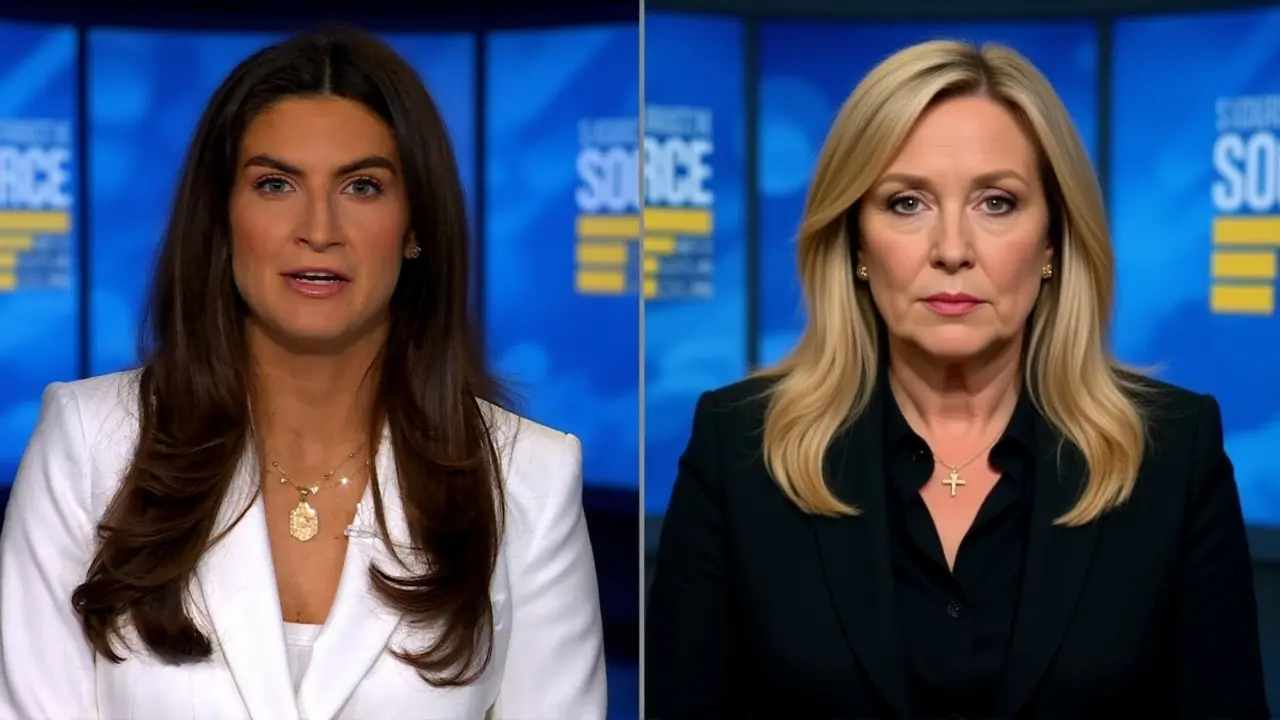
The political alliance between some of the most prominent figures in the MAGA movement hit a sudden, spiritual snag this week. Marjorie Taylor Greene, the firebrand Representative from Georgia, has publicly condemned Donald Trump after the former president shared a social media image depicting himself as Jesus Christ. It's a rare and jarring instance of one of Trump's most vocal supporters calling him out for what she describes as a direct affront to the Christian faith.
The tension came to a head during an interview on CNN on Monday, where Greene didn't mince words about the imagery. "No, absolutely not. I thought that was blasphemy," she told the network. For Greene, this wasn't just a political misstep or a quirky piece of digital art; it was a deeply personal offense. She emphasized that as a Christian, the portrayal crossed a line that should never be touched, regardless of who is in the photo.
Here's the thing: the image in question wasn't just a simple filter. Greene described a composition where Trump was draped in robes typical of traditional religious iconography, with light radiating from his hands. In a strange twist, she noted the image portrayed him discussing the healing of people, comparing the vibe to that of a Red Cross worker, but with a divine veneer. Turns out, for Greene and a significant portion of the evangelical base, replacing a savior with a politician is a bridge too far.
A Call for Contrition Over Defensiveness
Greene's reaction went beyond a simple expression of distaste. She explicitly called for the former president to take accountability for the post. "I think it was blasphemy. I was offended. I think he should apologize, not act defensive," she stated during the broadcast. It's a bold move, considering the tight-knit nature of the current GOP leadership and the generally unwavering loyalty Greene has shown Trump in the past.
But the criticism didn't stop at the CNN studio. Later, taking to X (the platform formerly known as Twitter), Greene doubled down on her stance. In a post that signaled the severity of her frustration, she claimed the incident was "more than blasphemy." While she didn't elaborate on exactly what that "more" entailed, the implication is clear: she views this as a fundamental violation of spiritual boundaries that transcends a typical political disagreement.
- The Image: Depicted Donald Trump in robes as Jesus Christ with emanating light from his hands.
- The Reaction: Marjorie Taylor Greene labeled the post "blasphemy" and "more than blasphemy."
- The Demand: A formal apology from Trump rather than a defensive response.
- The Platform: Criticisms were aired on CNN and later amplified on X.
The Friction Within the MAGA Coalition
This public spat reveals a fascinating crack in the armor of the Trump-Greene relationship. During her interview, Greene admitted that she and the former president have had their differences on a few key issues. Oddly enough, she seems to view this religious portrayal as a separate, more critical category than their usual policy disagreements. By specifying that this was about "President Trump trying to portray himself as Jesus," she's drawing a hard line between political loyalty and religious devotion.
Analysts suggest that this conflict highlights the delicate balance Trump must maintain with the evangelical wing of his base. While many supporters view him as a "chosen" leader or a fighter for faith, there is a theological ceiling. When a political figure moves from being a *defender* of the faith to *claiming the identity* of the faith's central figure, it risks alienating the very people who provide his strongest grassroots support.
Broader Implications for the Religious Right
The ripple effects of this disagreement could be significant. If other high-profile evangelical lawmakers join Greene in her condemnation, it could force Trump to pivot his social media strategy. The religious right in the U.S. is not a monolith, but the concept of blasphemy is a powerful motivator. If the narrative shifts from "Trump is fighting for Christians" to "Trump is mocking the faith," it could create a friction point that opponents are eager to exploit.
Interestingly, this comes at a time when the intersection of faith and politics is more volatile than ever. The use of AI-generated imagery has made it easier for supporters (or trolls) to create these kinds of provocative photos, but the human reaction—as seen with Greene—remains rooted in centuries-old theological convictions. The details of how Trump's team will respond remain unclear, but the demand for an apology is now a matter of public record.
Historical Context of Political Divinity
While it may seem shocking now, the tendency for political leaders to associate themselves with divine authority isn't new. However, in the American context, the direct visual appropriation of Jesus Christ is virtually unheard of for a mainstream politician. Historically, leaders have claimed "divine right" or "God's will," but the leap to visual identification is a different beast entirely.
Greene's reaction mirrors historical tensions within American Protestantism, where the line between secular power and spiritual authority is fiercely guarded. By framing this as "more than blasphemy," she is tapping into a deep-seated cultural anxiety about the hubris of power. It's a reminder that even in the most loyal political circles, there are lines that, once crossed, trigger an immediate and visceral rejection.
Frequently Asked Questions
Why did Marjorie Taylor Greene call the photo blasphemy?
Greene stated that as a Christian, she was deeply offended by the depiction of Donald Trump wearing robes and emanating light as Jesus Christ. She believes that portraying a political figure as the central figure of the Christian faith is a violation of religious sanctity and therefore constitutes blasphemy.
What exactly was depicted in the photograph?
According to Greene's description during her CNN interview, the photo showed Trump in traditional religious robes with light coming from his hands. The imagery suggested he was healing people, which Greene compared to the work of a Red Cross worker, but presented in a divine religious context.
Has Marjorie Taylor Greene and Donald Trump disagreed before?
Yes, Greene acknowledged during her interview that she and the former president have had differences on several key issues in the past. However, she characterized this specific incident as being "completely different" because it involved a spiritual and religious transgression rather than a political policy dispute.
What is Greene demanding from Trump following the post?
Greene has explicitly called for Donald Trump to issue a direct apology for the image. She emphasized that he should not "act defensive" but instead acknowledge the offense caused to many Christians across America and around the world.
Where did she express her strongest criticisms?
While the initial detailed critique occurred during her CNN interview on Monday, her strongest language appeared on X (formerly Twitter). In her post, she escalated her rhetoric by stating that the act was "more than blasphemy," suggesting a deeper level of offense than her televised comments indicated.

Mason Interactive
April 17, 2026 AT 16:10Man, the weirdest part is that this is actually coming from MTG. I never thought I'd see the day where she's the one calling out the lack of boundaries on a religious post lol
Antony Bachtiar
April 19, 2026 AT 07:15who even cares?? it is just a pic lol. shes just doin this for atention and we all know it. stop actin like its such a big deal when everyyone knows its just marketing
Shelley Brinkley
April 19, 2026 AT 12:43clown show. both of em are just performative for the base and honestly its just a race to the bottom at this point. totaly predictable
Aaron X
April 20, 2026 AT 01:57The ontological dissonance here is palpable. We are witnessing a collision between the hagiography of political leadership and the rigid semiotics of orthodox theology. When a secular figure attempts to occupy the metaphysical space of a deity, it creates a cognitive rupture that even the most ardent supporters cannot reconcile because the symbolic capital of the faith exceeds the political utility of the leader
nikolai kingsley
April 21, 2026 AT 01:06this is straight up sacrilege. i dont care who did it but its an insult to every beleiver. honestly the lack of respect for the divine these days is just pathetic and honestly disgustng
Beth Elwood
April 22, 2026 AT 10:57It's really interesting how AI is making this kind of imagery so common now 🤖. It's creating these weird feedback loops where supporters make things the candidates didn't even intend, but then the candidates get the heat for it anyway! 😅 Truth is, the religious base is always going to have a hard line on this stuff ⛪️🙌
Gary Clement
April 23, 2026 AT 09:40the ai generated nature of these images often leads to these kinds of blowups because there is no clear line of ownership anymore. if a fan made it and he just shared it, the intent is different than if he commissioned it. either way, the optics are just bad when you deal with evangelical voters
Josh Raine
April 24, 2026 AT 14:15Why is it that people only care about blasphemy when it's a politician they like? 🙄 It's the sheer audacity of the ego here that's the real problem. Trying to merge a political brand with the actual Messiah is just narcissistic on a level I can't even comprehend. Give me a break!
Angie Khupe
April 24, 2026 AT 20:20I hope they can find a way to make peace over this soon 🕊️. It's always sad when people who usually agree on so much start fighting over these things. Maybe a simple apology will fix everything? ❤️
Mel Alm
April 26, 2026 AT 13:06I just think it's kinda weird to post stuff like that regardless of faith. like just keep it professional lol. its a bit too much even for the internet these days
Alex Green international
April 26, 2026 AT 13:25It is perhaps beneficial to consider how one might navigate such a delicate interpersonal conflict with grace. Maintaining a level of professionalism while addressing spiritual grievances is a challenging yet necessary endeavor for any public figure
Dianna Knight
April 28, 2026 AT 12:21I totally hear where the frustration is coming from in this situation. From a strategic perspective, the cognitive dissonance created by this imagery is just too high for the core demographic to ignore. It's like a total breakdown in the brand alignment 📉. But honestly, if we just approach this with some empathy and a willingness to listen, maybe we can bridge the gap between the political and the spiritual without all this shouting! 🌸✨