
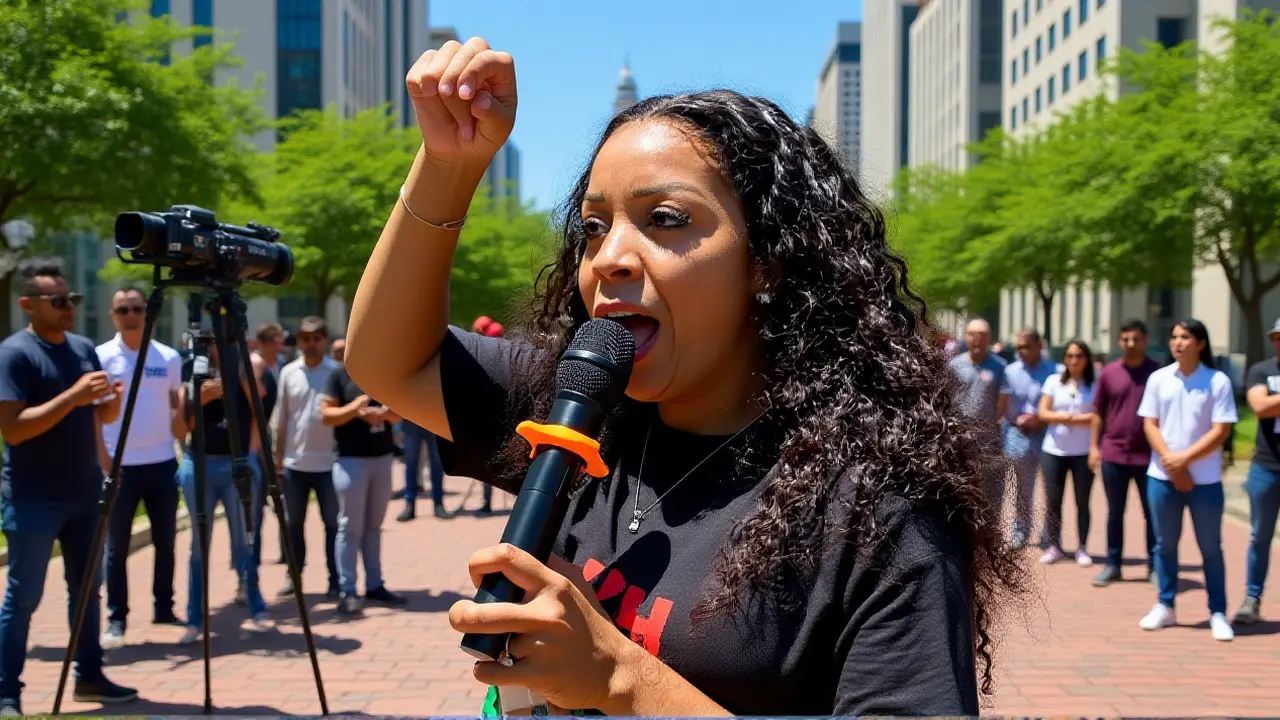
When Jacinta Ngobese-Zuma, founder and leader of the March and March Movement, returned from a trip to the United States, she didn't just bring back souvenirs. She brought back accusations of hypocrisy that have ignited a fierce public debate in South Africa. The core question hanging over her head is simple but damaging: how can you lead a movement that denounces foreigners while actively engaging with programmes abroad?
The controversy exploded on social media after trade unionist Zwelinzima Vavi posted an opinion piece on X (formerly Twitter) on 26 June 2026. Titled "Denounce foreigners but join US programmes? The Jacinta Ngobese-Zuma case," the commentary highlighted what many see as a glaring contradiction in Ngobese-Zuma’s activism. The post quickly gained traction, racking up 214 likes and sparking 184 replies, signaling that this isn't just niche political chatter—it's a mainstream concern.
The Rise of March and March
To understand the backlash, you need to look at who Ngobese-Zuma has become since leaving her career as a radio journalist. She transformed into one of the most polarizing figures in South African politics by founding the March and March Movement. This group campaigns aggressively against illegal immigration, framing undocumented migrants not as victims seeking refuge, but as an existential threat to local citizens.
Her rhetoric is sharp. In press conferences, she has described the current migration situation as an "invasion" of South Africa—a phrase that echoes the populist language used by former U.S. President Donald Trump. She insists her movement is not xenophobic, arguing instead that it supports legal immigration and demands efficient law enforcement. But critics argue that the line between enforcing borders and inciting hatred is increasingly blurred.
In an exclusive interview on 2 May 2026, Ngobese-Zuma laid out her grievances. She blamed weak government enforcement for allowing illegal immigration to worsen and claimed that state institutions were failing to protect South African jobs. Her demands are specific: stricter border controls, prioritization of citizens for public services, and decisive action by the Department of Home Affairs.
Aggressive Demands and Policy Clashes
The movement didn't stop at complaints. On 25 May 2026, Ngobese-Zuma held a media briefing where she issued a list of radical demands directed at the national government. She called for an immediate halt to refugee application processing for 14 days, arguing that the state should pause approvals until a new migration white paper is implemented.
She went further, demanding the mass deportation of all undocumented immigrants and suggesting they should pay for their own return travel to discourage repeat entries. She also pushed for legislative changes to allow the Border Management Authority (BMA) to operate inside the country, not just at borders. According to her, South Africa was only operating at 25% capacity at its borders, necessitating a state of emergency.
However, fact-checkers at GroundUp pointed out significant flaws in her understanding of border security. They noted that Ngobese-Zuma seemed to confuse the roles of approximately 800 immigration officers—who check passports at ports of entry—with broader border management functions. More concerning were her unproven claims that foreign-funded NGOs were buying arms for immigrants, allegations for which no evidence has been presented.
The Contradiction: Anti-Foreign Rhetoric vs. US Engagement
Here’s the twist that has critics circling like sharks. While Ngobese-Zuma rails against foreign influence and demands that foreigners leave South Africa, she recently visited the United States. A YouTube video titled "WHAT DID JACINTA NGOBESE-ZUMA WANT IN THE USA?" highlights the confusion surrounding her trip. The purpose remains unclear, but the optics are problematic for a leader whose brand is built on rejecting foreign entanglements.
Zwelinzima Vavi’s opinion piece zeroes in on this dissonance. If the March and March Movement is truly about protecting South African sovereignty and resources, why engage with U.S. programmes? Is it networking? Funding? Or simply tourism? The lack of transparency fuels suspicion. Ngobese-Zuma has denied that her movement receives funding from Israel or any foreign donors, insisting on 24 June 2026 that it is supported by voluntary contributions and personal resources. She even offered to show bank statements to skeptics, calling the allegations "offensive" and based on stereotypes.
Yet, the visual narrative is powerful. An activist telling locals to stay home and work while she travels abroad to meet with international entities creates a perception of elitism. It undermines her claim to represent the struggling township economy she says she wants to protect.
Government Response and Public Unrest
The government hasn't sat idle. On 14 June 2026, the Inter-Ministerial Committee on Migration held a public briefing, acknowledging public concern but warning that protests must remain lawful. Officials cautioned against civilians conducting illegal "ID checks," emphasizing that only the state has the authority to verify identity documents. SABC News featured Ngobese-Zuma in reaction segments, highlighting her central role in these debates.
Tensions peaked around 30 June 2026, the deadline Ngobese-Zuma set for undocumented immigrants to leave. Reports from YEN.com.gh indicated that this date triggered mass deportations and violent standoffs. In a video posted on 29 June, Ngobese-Zuma accused the government of trying to "instil fear" to discourage participation in the march. Meanwhile, social media reels showed her claiming that undocumented immigrants had become "too emboldened," behaving "more South African" than citizens.
This rhetoric has sparked a continental debate. Some supporters view her stance as necessary economic protectionism. Critics, however, see it as inflammatory xenophobia that threatens regional solidarity. Her recent comments dismissing other African nations' support during South Africa’s 2026 FIFA World Cup run further fueled perceptions of isolationism.
What’s Next for the Movement?
The aftermath of the 30 June deadline will define the next chapter for March and March. Will the movement pivot toward constructive policy engagement, or will it continue down the path of confrontation? The unresolved questions about Ngobese-Zuma’s U.S. trip suggest that trust deficits will persist.
As the government tightens border controls through the BMA and Home Affairs reforms, the role of activist groups like March and March will be scrutinized. Are they partners in governance or obstacles to stability? For now, the contradiction remains: a leader preaching self-reliance while seeking validation abroad.
Frequently Asked Questions
Who is Jacinta Ngobese-Zuma?
Jacinta Ngobese-Zuma is a former radio journalist turned activist and the founder of the March and March Movement in South Africa. She leads a campaign focused on strict immigration enforcement, border control, and protecting economic opportunities for South African citizens, often using strong rhetoric against undocumented immigrants.
Why is there controversy over her US trip?
Critics highlight a perceived hypocrisy: Ngobese-Zuma leads a movement that denounces foreigners and foreign influence in South Africa, yet she recently engaged with programmes in the United States. This has raised questions about the consistency of her nationalist stance and potential undisclosed foreign connections.
What are the main demands of the March and March Movement?
The movement demands immediate mass deportation of undocumented immigrants, a pause on refugee applications for 14 days, legislative changes to expand the Border Management Authority's powers, and the reservation of township economies for South African small businesses. They also call for a state of emergency regarding illegal immigration.
Is the March and March Movement funded by foreign entities?
Ngobese-Zuma has firmly denied allegations that the movement is funded by Israel or other foreign donors. She states that the organization relies on voluntary donations from South Africans and her personal resources, offering to provide bank statements as proof of financial transparency.
What happened on 30 June 2026?
30 June 2026 was the deadline set by Ngobese-Zuma for undocumented immigrants to leave South Africa. The date led to heightened tensions, reports of mass deportations, and violent standoffs. Ngobese-Zuma urged citizens to participate in large numbers for a protest, accusing the government of attempting to suppress turnout.
