
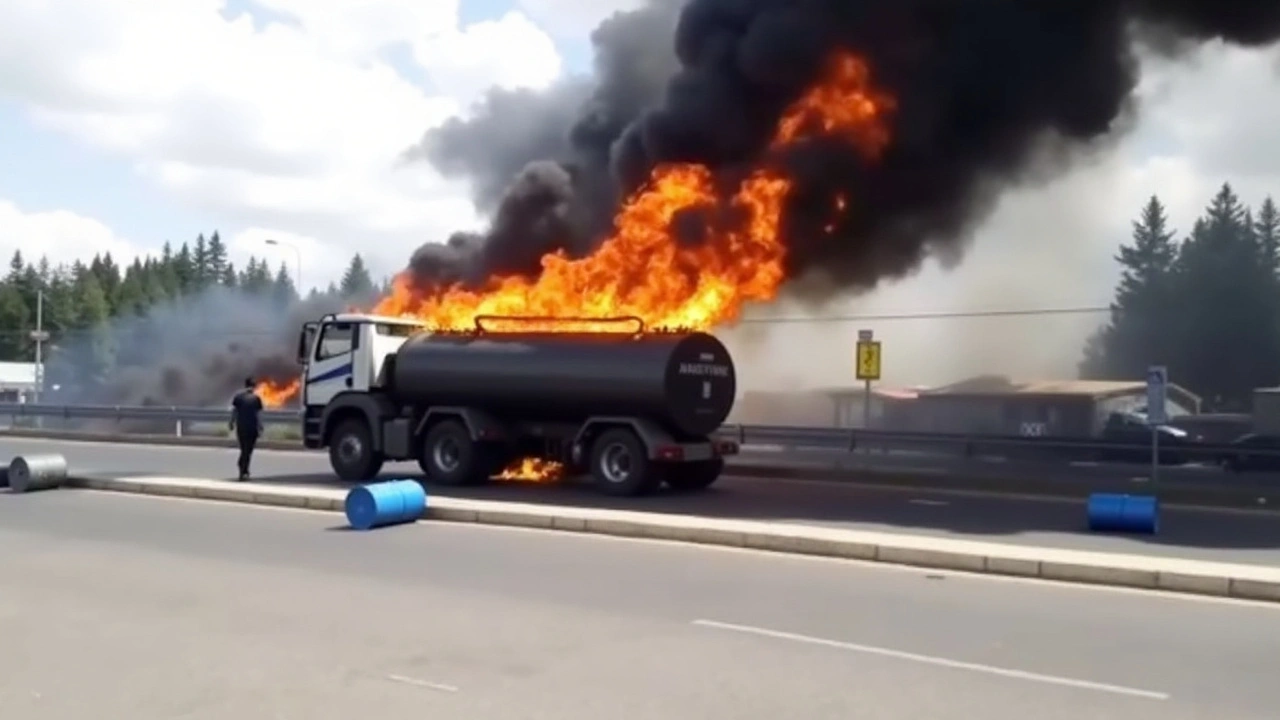
The Aftermath of the Jigawa Tanker Explosion
In a heart-rending incident that has plunged Jigawa State and the entire nation into mourning, a petrol tanker explosion in Majiya village within the Taura Local Government Area has reportedly claimed the lives of over 100 individuals, leaving countless others injured. This tragic event unfolded in what can only be described as a devastating blow to the local community and a wake-up call for authorities across Nigeria. The National Youth Alliance (NYA), a prominent youth organization, recently released a statement expressing deep sorrow over the incident. Their response mirrors the profound grief felt by many who have been personally affected while also highlighting broader concerns about safety standards.
The Scene: A Village Shattered
The explosion in Majiya village left a trail of destruction and despair in its wake. Eyewitnesses recall the fateful night as nothing short of chaotic, with a fierce blaze engulfing the surroundings aided by flammable fuel from the overturned tanker. This rural community, known for its tight-knit inhabitants, found itself helpless in the face of this disaster. Families were torn apart, with their loved ones either perishing in the flames or sustaining severe injuries that require immediate medical attention. The immediate aftermath saw surviving villagers scrambling for survival, a scene eerily reminiscent of some of the worst industrial disasters in recent memory.
Human Toll: Victims and Survivors
The human toll of this catastrophe is staggering. Although various reports suggest a death toll exceeding 100, precise figures remain elusive as emergency personnel work tirelessly to piece together the full extent of the devastation. Survivors recount tales of bravery and horror, from individuals risking their lives to rescue neighbors to harrowing accounts of families trapped by flames. These heart-wrenching stories provide a solemn reminder of the fragility of life and the enduring spirit of community in times of crisis. In addition to those who perished, many have been left with life-changing injuries. Hospitals across the region are struggling to cope with the influx of victims, highlighting the urgent need for additional resources and support.
National Youth Alliance's Response
The emotional resonance of this tragedy prompted an immediate response from the National Youth Alliance. In their statement, the NYA articulated their heartfelt condolences to the families of those affected, while emphasizing the broader implications for public safety. Their poignant words underscore a palpable sense of frustration with the lack of adequate safety protocols that permit such catastrophic accidents. The NYA's vocal advocacy for improved safety measures is part of a swelling chorus of calls for change, echoing throughout social media and public discourse alike.
Preventative Measures and Safety Concerns
As the community comes to terms with this tragic event, authorities are under increasing pressure to implement preventative strategies designed to avert future incidents. Experts have long warned about the dangers posed by inadequately maintained roads, poor vehicle upkeep, and insufficient emergency response capabilities, all factors that may have contributed to the severity of the Jigawa explosion. Calls for stricter regulations governing the transportation of hazardous materials have grown louder, with stakeholders urging for comprehensive reforms to ensure the safety of all Nigerians.
Long-Term Implications and Reforms
The unfolding tragedy serves as a grim reminder of the need for substantial investments in infrastructure and safety compliance. While policymakers have pledged to investigate the causes of the explosion, the broader challenge will be translating words into action. Ensuring that protective measures are implemented broadly across similar high-risk sectors will require political will and public cooperation. Additionally, there is a pressing need for public awareness campaigns that educate communities about the potential hazards associated with nearby industrial activities.

The Road Ahead: Healing and Hope
In the wake of such devastation, the road to recovery will be necessarily long and fraught with challenges. However, the resilience of the community offers a glimmer of hope. Vigorous community-driven support networks have emerged, providing both immediate relief to affected families and long-term assistance in rebuilding shattered lives. The strength and solidarity displayed by residents of Majiya and beyond will be instrumental in the healing process. Together, with informed policy enhancements and public vigilance, there is potential to turn this moment of profound adversity into a catalyst for meaningful change.

Mark Archuleta
October 19, 2024 AT 18:51The infrastructure gaps here are systemic and not accidental. We're talking about a failure in risk assessment protocols, fuel transport regulations, and emergency response coordination-all of which have been flagged for over a decade. The real issue isn't just this explosion, it's the normalization of preventable disasters in under-resourced regions. Until there's real accountability and enforcement, not just press releases, we're just rearranging deck chairs on the Titanic.
Public-private partnerships need to be restructured with mandatory safety audits. No more grandfathered exemptions. No more bribes disguised as 'community development fees.' This isn't just about Nigeria-it's about global supply chain ethics. We fund these logistics networks. We're complicit if we stay silent.
Pete Thompson
October 21, 2024 AT 02:07Let’s not romanticize the ‘resilience’ narrative. Resilience is what the oppressed are forced to cultivate when the state fails them. This isn’t tragedy-it’s the logical outcome of a postcolonial state that treats human life as expendable collateral in the pursuit of profit and political inertia. The NYA’s statement is performative. Where were they when the first tanker leaked in 2015? Where were the lawmakers when the first child died in a similar incident? The moral bankruptcy runs deeper than this one explosion-it’s institutionalized.
And don’t mistake community solidarity for justice. Solidarity doesn’t rebuild roads. Solidarity doesn’t fund ambulances. Solidarity doesn’t prosecute negligent officials. Stop elevating grief into virtue. Demand accountability.
Richard Berry
October 21, 2024 AT 13:46man i just saw a video of people carrying kids through the smoke and i cant even
how do you even process that? like, i live in a place where if a gas station catches fire they shut down the whole block and call 50 people. here it’s like… oh well, guess that’s just how it is
we gotta do better. not tomorrow. now. my heart is heavy
Sandy Everett
October 23, 2024 AT 06:27There’s a quiet strength in how communities come together after something like this. Neighbors sharing food, strangers offering rides to hospitals, elders organizing prayer circles-it’s not glamorous, but it’s real healing.
What we need now isn’t just policy changes, it’s listening. Let the families in Majiya lead the conversation. Let them tell us what support looks like, not what we think they need. And then-actually follow through. No empty hashtags. No photo ops with officials. Just sustained, respectful action.
Also, if you’re reading this and you have medical supplies or connections to NGOs, please reach out. Someone’s child is still waiting.
J Mavrikos
October 24, 2024 AT 20:24Look, I’m from Canada and we’ve had our own tanker disasters, but nothing on this scale. The thing that kills me is that this was predictable. We know how to transport fuel safely. We have tech, we have standards, we have training programs.
So why isn’t it happening? Is it corruption? Negligence? Or just… indifference?
I’m starting a fundraiser for trauma counseling for survivors. If you’re reading this and you’ve got 20 bucks, send it. This isn’t charity. It’s basic humanity. And if you’re in Nigeria and you’re reading this-hang in there. The world hasn’t forgotten you.
Stuart Sandman
October 26, 2024 AT 01:25They say it was an accident. But who benefits? Who owns the tanker? Who controls the roads? Who profits from the chaos?
This wasn’t fate. This was a calculated risk. A slow-motion massacre disguised as negligence. The same people who sell you cheap fuel also own the ambulances that never arrive. The same officials who cry on TV are the ones who approved the route through a village at rush hour.
They call it tragedy. I call it genocide by bureaucracy. The West looks away because they don’t want to admit their oil pipelines run through blood-soaked soil. Wake up. This isn’t Africa’s problem. It’s the problem of every nation that treats human life as a line item on a balance sheet.
DJ Paterson
October 26, 2024 AT 21:56There’s a difference between grief and guilt. We feel grief for the lives lost. But guilt? That’s harder. It’s the quiet voice asking: ‘What did I do to prevent this?’
I don’t live in Nigeria. I’ve never seen a tanker in Majiya. But I’ve bought fuel. I’ve ridden in cars. I’ve benefited from systems that assume someone else will pay the price for convenience.
Maybe the real reform isn’t in laws or audits. Maybe it’s in how we see each other. Not as statistics or victims or ‘those people’-but as human beings who deserve to get home safely. That shift in perspective? That’s the only thing that lasts longer than grief.
And if we can’t even manage that, then what are we really fighting for?